Rug Care for Homes Near Tate Britain, Pimlico
Rugs do a lot of quiet work in a home. They soften a room, warm up wooden floors, reduce noise, and tie together a space that might otherwise feel bare. But in homes near Tate Britain in Pimlico, they also face a very specific mix of challenges: foot traffic from busy streets, dust carried indoors, occasional damp, pet hair, party spillages, and the everyday grind of London living.
That is why thoughtful rug care for homes near Tate Britain, Pimlico is not just about keeping fibres looking fresh. It is about protecting a textile investment, preserving indoor air quality, and making sure your rooms still feel welcoming months and years down the line. Whether your rug is a hand-knotted wool piece, a synthetic runner, or a hallway rug that sees everything from muddy shoes to coffee cups, the right approach can make a noticeable difference.
In this guide, you will find practical advice on day-to-day maintenance, deep cleaning decisions, stain response, and when professional help makes sense. If you are building a broader home care routine, you may also find it useful to explore the service options available in Pimlico, especially if your rug care needs sit alongside general housekeeping or seasonal cleaning.
Table of Contents
- Why Rug Care for Homes Near Tate Britain, Pimlico Matters
- How Rug Care for Homes Near Tate Britain, Pimlico Works
- Key Benefits and Practical Advantages
- Who This Is For and When It Makes Sense
- Step-by-Step Guidance
- Expert Tips for Better Results
- Common Mistakes to Avoid
- Tools, Resources and Recommendations
- Law, Compliance, Standards, or Best Practice
- Options, Methods, or Comparison Table
- Case Study or Real-World Example
- Practical Checklist
- Conclusion
- Frequently Asked Questions
Why Rug Care for Homes Near Tate Britain, Pimlico Matters
Living close to Tate Britain means being near one of London's busiest and most culturally active pockets. That has advantages, of course, but it also means homes can accumulate fine dust, grit, and general urban debris faster than you might expect. Rugs are usually the first textile surface to show it. A hallway rug can trap grime from shoes. A living room rug can fade unevenly if it sits near strong daylight. A wool rug in a cool flat may hold moisture longer than you would like.
There is another reason rug care matters in this area: property styles vary a lot. Some homes are period conversions with original features, while others are modern apartments or shared flats. Each setting affects how a rug wears. High ceilings and hard flooring can make dust more visible. Compact rooms can make spills more likely because furniture and walkways are tighter. If you are in a home with regular guests, children, or pets, the pace of wear increases again.
Good rug care is therefore less about chasing perfection and more about preventing avoidable damage. The difference between a rug that looks tired after one winter and one that still feels composed after years is often routine: vacuuming properly, rotating it, dealing with spots quickly, and choosing the right cleaning method for the fibre type.
Practical takeaway: the cleaner the fibres stay at floor level, the less abrasive dirt gets worked into the weave. That is what protects both appearance and lifespan.
If you are also keeping the rest of the property in order, a regular house cleaning routine in Pimlico can reduce the amount of dust and residue that reaches your rugs in the first place.
How Rug Care for Homes Near Tate Britain, Pimlico Works
At a basic level, rug care works by removing dry soil before it embeds, controlling moisture, and preventing fibre distortion. That sounds simple, but the details matter. A rug made from wool behaves very differently from one made from polypropylene or viscose. Some dyes are stable. Others may bleed if they are over-wet. Some backings can tolerate spot cleaning. Others can be damaged by heat or aggressive scrubbing.
A sensible care routine usually has three layers:
- Routine maintenance - vacuuming, shaking out smaller rugs where appropriate, and spot-checking wear.
- Targeted cleaning - dealing with spills, tracked-in dirt, and isolated marks before they spread.
- Periodic deep cleaning - a more thorough wash or professional treatment based on the rug's fibre, construction, and condition.
In many homes, the biggest mistake is waiting until a rug looks dirty before doing anything. By then, the soil often sits deeper in the pile and the fibres may already be flattened. Regular maintenance is gentler, cheaper, and usually more effective.
For larger households, landlords, or busy professionals, the routine can be folded into domestic cleaning support in Pimlico or a one-off refresh when life gets a bit too full. No shame in that; rugs rarely care about our schedules.
For homes with worn traffic lanes or heavy furniture marks, rug care may also overlap with upholstery and soft furnishing care. In those cases, upholstery cleaning in Pimlico can be a useful companion service, especially if the room's textiles need a coordinated refresh.
Key Benefits and Practical Advantages
Proper rug maintenance brings more than a neat appearance. The gains are practical, financial, and everyday-comfort related.
- Longer rug life: Removing grit reduces abrasion, which helps fibres hold their structure.
- Better appearance: Colours stay clearer and patterns remain visible instead of looking dulled by dust.
- Improved indoor comfort: Clean rugs make a room feel fresher, especially in smaller Pimlico flats where air circulation can be limited.
- Lower risk of staining: Dirt-free fibres are easier to clean when spills happen.
- Reduced odour build-up: Pet hair, food residue, and moisture are less likely to linger.
- Protection for floors underneath: A clean rug with a suitable underlay can help reduce scuffing on timber or stone floors.
There is also a very real decorative benefit. A well-kept rug makes a room feel finished. A neglected one does the opposite. Even if the rest of the room is spotless, a flattened or stained rug can make the whole space feel tired.
If you are preparing a property for sale, letting, or refurbishment, rug care can sit alongside a broader reset such as spring cleaning in Pimlico or a more thorough deep cleaning service. That is often the point where the difference becomes obvious.
Who This Is For and When It Makes Sense
Rug care is not just for large period homes or expensive wool pieces. It makes sense for almost anyone with a rug underfoot, but the priority level changes depending on how the home is used.
- Homeowners in busy streets: If your front door opens onto regular foot traffic, dust and grit will reach your rugs faster.
- Flat residents: In smaller homes, rugs often do double duty as both comfort and acoustics management, so wear becomes more visible.
- Landlords and tenants: End-of-tenancy standards often depend on how well soft furnishings have been maintained.
- Pet owners: Hair, dander, and occasional accidents make a routine essential rather than optional.
- Families: Snacks, art supplies, muddy shoes, and playtime all tend to find the rug eventually.
- Collectors and design-conscious homeowners: Specialty or handmade rugs need more careful handling than standard mass-market pieces.
When does it make sense to bring in help rather than manage it alone? Usually when the rug is valuable, the stain is unknown, the smell persists after basic cleaning, or the piece has already developed wear that you do not want to worsen. A quick review of carpet cleaning in Pimlico can also help you judge whether your rug needs something closer to a standard clean or a more specialist treatment.
For households moving in or out, rug care also ties into broader move-related cleaning. If that is your situation, end-of-tenancy cleaning in Pimlico may be the more efficient path.
Step-by-Step Guidance
Below is a practical, non-fussy method for caring for most household rugs. Always adapt it to the material label or manufacturer guidance where available.
1. Identify the fibre and construction
Before you clean anything, find out what the rug is made from. Wool, cotton, jute, synthetic fibres, silk blends, and viscose all need different handling. Hand-knotted rugs can have different backing and dye behaviour from machine-made ones. If you are unsure, test carefully in a hidden corner.
2. Vacuum properly, not aggressively
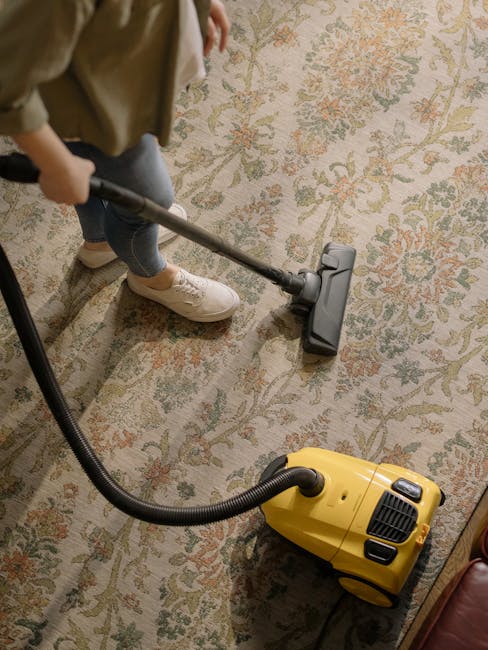
Use a vacuum with a suitable setting. If the pile is delicate, avoid a harsh beater bar. Vacuum both sides where practical, and pay close attention to the edges where dust collects. A slow pass is more effective than a rushed one.
3. Rotate the rug
Every few months, rotate the rug to even out sunlight exposure and foot traffic. This small habit prevents one side from fading or wearing more quickly than the rest.
4. Blot spills immediately
Use a clean cloth or paper towel to blot, not rub. Rubbing spreads the stain and can push it deeper. Work from the outside of the spill inward. If the liquid is coloured or oily, be cautious with water until you know what the fibre will tolerate.
5. Treat the stain according to the source
Food, mud, ink, grease, and pet accidents all respond differently. What works on a juice stain may make a grease mark worse. When in doubt, use the mildest effective approach first. Stronger products can always be considered later; the reverse is not true.
6. Dry thoroughly
Any rug that has been damp cleaned should dry fully and evenly. Good airflow matters. Lift it slightly off the floor if the backing allows, and avoid placing it on underfloor heating too soon unless the care instructions support that. Trapped moisture can lead to odour or mildew.
7. Schedule periodic deep cleaning
Depending on use, some rugs need a professional clean every 6 to 12 months; others can go longer. The right interval depends on material, household traffic, and whether the rug sits in a hallway or a low-use room. In a busy London home, "rarely" is usually not a maintenance strategy.
If you prefer to outsource the heavy lifting, you can review pricing and quotes before deciding what level of help fits the rug and the room.
Expert Tips for Better Results
Small details often determine whether a rug looks acceptable or genuinely well cared for. Here are the habits that tend to make the biggest difference.
- Use a rug pad: It helps reduce slipping, absorbs some movement, and lessens wear underneath.
- Deal with grit first: Dry soil is abrasive. Removing it before any wet treatment is one of the best ways to protect fibres.
- Test cleaners carefully: Even mild products can affect dyes or finishes. A hidden test spot is worth the time.
- Avoid over-wetting: Too much water can cause browning, rippling, or backing damage.
- Mind the edges: Fringes and borders often wear first, yet they are easy to overlook.
- Keep shoes off high-value rugs: This sounds obvious, but it is one of the cheapest forms of prevention available.
A useful rule of thumb: if the rug starts to smell faintly stale, feels matted, or looks dull even after vacuuming, you are probably looking at embedded soil rather than surface dirt.
For service standards and care expectations, it can also help to review a provider's health and safety policy and insurance and safety information before booking any treatment. That is especially sensible for delicate or expensive items.
Common Mistakes to Avoid
Rug damage often happens because someone tries to solve a problem quickly. Fair enough. Unfortunately, rugs rarely reward improvisation.
- Scrubbing stains hard: This can spread the mark and distort the pile.
- Using the wrong cleaner: Bleach, harsh detergents, and random "multi-purpose" products can cause permanent issues.
- Ignoring the care label: Some materials are far more sensitive than they look.
- Leaving wet patches to air-dry slowly: Slow drying can create odour and mildew risk.
- Skipping vacuuming before wet cleaning: This can turn loose dirt into slurry.
- Forgetting the underlay: The rug may be clean, but the pad underneath can hold moisture or grime.
One of the most common oversights in homes near busy cultural and residential areas is underestimating how much soil arrives indoors on shoes, bags, and coats. That grit may be tiny, but over time it acts like fine sandpaper.
If your rug is part of a larger refresh before visitors arrive or a property is handed over, a one-off cleaning service in Pimlico can help keep the whole home coherent rather than fixing one textile in isolation.
Tools, Resources and Recommendations
You do not need a cupboard full of specialist products to care for a rug well. In fact, simpler is often better.
| Tool or Resource | Best Use | Why It Helps |
|---|---|---|
| Vacuum with adjustable suction | Routine dust and grit removal | Prevents fibre strain on delicate rugs |
| White microfiber cloths | Blotting spills and spot treatment | Reduces dye transfer and lint |
| Soft brush | Lifting surface debris | Gentler than aggressive scrubbing |
| Rug pad | Stability and underside protection | Reduces slipping and wear |
| Manufacturer care label | Material-specific guidance | Helps avoid treatment mistakes |
For readers who want a broader service context, the about page is a useful place to understand how a local cleaning provider frames its work, while booking a cleaner can be the next step if you want the rug assessed alongside the rest of the home.
You may also want to check current promotions before arranging a visit. If there is a saving available, it is always nice to know before you commit. Basic economics, really.
Law, Compliance, Standards, or Best Practice
Rug care in a home is not usually a regulated activity in the same way as some trades, but there are still sensible best-practice expectations. If you hire a professional cleaner, you should expect transparent service descriptions, reasonable care with your property, and attention to health and safety. Good providers should also be able to explain how they handle access, liability, and any limitations around delicate materials.
From a homeowner's perspective, the key issue is not legal complexity so much as safe and appropriate treatment. For example, if a rug has sentimental or high monetary value, you should ask whether the cleaner has experience with the fibre type and whether any treatment carries a risk of dye migration, shrinkage, or texture change. That is a fair question, not a fussy one.
Before booking, it is sensible to review pages such as terms and conditions, privacy policy, and payment and security information. These do not make a rug cleaner better on their own, of course, but they do give you a clearer picture of how the service is run.
If you are a tenant, landlord, or letting agent, it is also wise to align rug care with broader property standards. For move-outs, coordinated cleaning is usually easier to manage when the rug forms part of a whole-property plan rather than a last-minute add-on.
Options, Methods, or Comparison Table
Not every rug needs the same level of intervention. The right method depends on fibre, stain type, value, and how quickly you need the rug back in place.
| Method | Best For | Pros | Limitations |
|---|---|---|---|
| Routine vacuuming | Most household rugs | Low cost, easy to maintain, prevents embedded grit | Will not remove deep staining or odours |
| Spot cleaning | Fresh spills and small marks | Fast response, targeted treatment | Can spread stains if done badly |
| Dry cleaning approach | Some delicate fibres and low-moisture needs | Less water exposure, often safer for sensitive items | Not suitable for every stain or construction |
| Professional wet cleaning | Heavily soiled or larger rugs | Deeper soil removal, can restore appearance well | Requires drying time and correct fibre handling |
For many households, the simplest rule is this: use routine maintenance for prevention, spot treatment for emergencies, and professional cleaning when the rug's condition exceeds what can be handled safely at home.
Case Study or Real-World Example
Consider a typical Pimlico flat near Tate Britain: a living room rug sits partly in daylight, partly under a coffee table, and partly in the route between the hallway and the kitchen. Over time, the traffic lane becomes slightly dull, the fringe collects dust, and a single tea spill gets cleaned quickly but leaves a pale ring.
At first glance, the rug still looks "fine." That is usually where people stop. But a better approach would be:
- Vacuum both sides if possible, focusing on the traffic lane.
- Rotate the rug so the worn side moves away from the main path.
- Spot-test a gentle cleaner on the tea mark.
- Allow full drying with good ventilation.
- Assess whether the rug still looks flat or needs professional treatment.
In this kind of real-world scenario, the issue is rarely one dramatic stain. It is the combined effect of daily use, dust, and sunlight. That is why a calm, consistent routine tends to win out over occasional panic cleaning.
For homes where the rug care needs sit alongside the rest of the living space, house cleaning support in Pimlico can help keep the whole environment in better condition, not just the visible textile surfaces.
Practical Checklist
Use this simple checklist to stay on track.
- Check the rug's material and care guidance.
- Vacuum regularly using the right setting.
- Rotate the rug to reduce uneven wear and fading.
- Blot spills immediately with a clean cloth.
- Test any cleaner in a hidden corner first.
- Avoid rubbing, soaking, or harsh chemicals.
- Ensure the rug dries fully after damp cleaning.
- Use a pad or underlay where appropriate.
- Watch for edge fraying, odour, or persistent dullness.
- Book professional help if the rug is valuable, delicate, or heavily soiled.
Quick rule: if you are unsure whether a treatment is safe, pause and get advice before you act. Most rug damage happens when people move too quickly.
Conclusion
Rug care for homes near Tate Britain, Pimlico is really about protecting comfort, appearance, and value in a part of London where homes live hard and look good doing it. The right routine does not need to be complicated. It needs to be consistent, suitable for the rug's fibre, and realistic for how you actually use the space.
Start with the basics: vacuum properly, handle spills quickly, rotate regularly, and do not overdo moisture or harsh products. Then decide whether a deeper clean is due based on the rug's condition, not just the calendar. That approach works whether you live in a compact flat, a larger family home, or a property that sees regular guests.
If your rug has become dull, stained, or simply too time-consuming to handle alone, professional support is a sensible next step. It is easier to protect a good rug than to rescue a badly neglected one, and, truth be told, rugs usually give you plenty of warning before they give up entirely.
Get a free quote today and see how much you can save.
Frequently Asked Questions
How often should I clean a rug in a busy Pimlico home?
For a busy household, routine vacuuming should happen weekly or more often in high-traffic areas. Deeper cleaning depends on fibre type and use, but many rugs benefit from professional attention every 6 to 12 months.
What is the safest way to clean a wool rug at home?
Start by vacuuming gently, then spot-test any cleaner on a hidden area. Use minimal moisture, blot rather than rub, and avoid harsh chemicals. Wool is durable, but it does not like rough treatment.
Can I use carpet shampoo on a rug?
Sometimes, but not always. Carpet shampoos can be too strong or too wet for certain rugs, especially delicate or dyed pieces. Always check the fibre type and test first.
What should I do if my rug gets a food or drink spill?
Blot immediately with a clean cloth, working from the outside inward. Avoid scrubbing. If the stain is greasy or coloured, use the mildest safe treatment you can and dry the area thoroughly.
How do I stop a rug from slipping on hard floors?
Use a quality rug pad or underlay suited to your floor type. It improves safety, helps the rug stay flat, and can reduce wear from movement.
Why does my rug look dull even after vacuuming?
That usually means dust and soil are embedded deeper in the pile. Regular vacuuming removes surface debris, but a deeper clean may be needed to restore brightness.
Are professional rug cleaning services worth it?
Yes, especially for valuable, delicate, or heavily used rugs. Professional cleaning can remove more embedded soil than home methods and reduces the risk of accidental damage from the wrong product or technique.
How can I tell if my rug is too delicate for DIY cleaning?
If it is silk, antique, hand-knotted, visibly fading, or has unstable dye, treat it cautiously. When the material or construction is unclear, it is safer to ask for professional guidance first.
Can rug care help with allergies or dust in the home?
It can help reduce dust build-up and trapped debris, which may improve overall cleanliness. It is not a medical solution, but a cleaner rug can contribute to a more comfortable indoor environment.
Should rug care be part of end-of-tenancy cleaning?
Absolutely. Rugs can affect the overall impression of a property, and neglected textile surfaces can undermine an otherwise clean room. If you are moving out, it is worth including them in the plan.
What is the biggest mistake people make with rug stains?
Scrubbing. Rubbing a stain usually makes it larger, pushes it deeper, and can damage fibres. Blot first, then treat carefully.
Where can I find a local service that handles rug cleaning and broader home care?
You can review local cleaning options on the service pages and compare what suits your home, rug type, and schedule. For a broader clean, many households pair rug care with domestic or deep cleaning support.
If your rug is part of a larger home refresh, you may also want to explore deeper cleaning support in Pimlico or learn more about the neighbourhood through this Pimlico area guide. For residents considering longer-term upkeep, the resident insights piece offers useful context on local living patterns that often shape cleaning needs.